





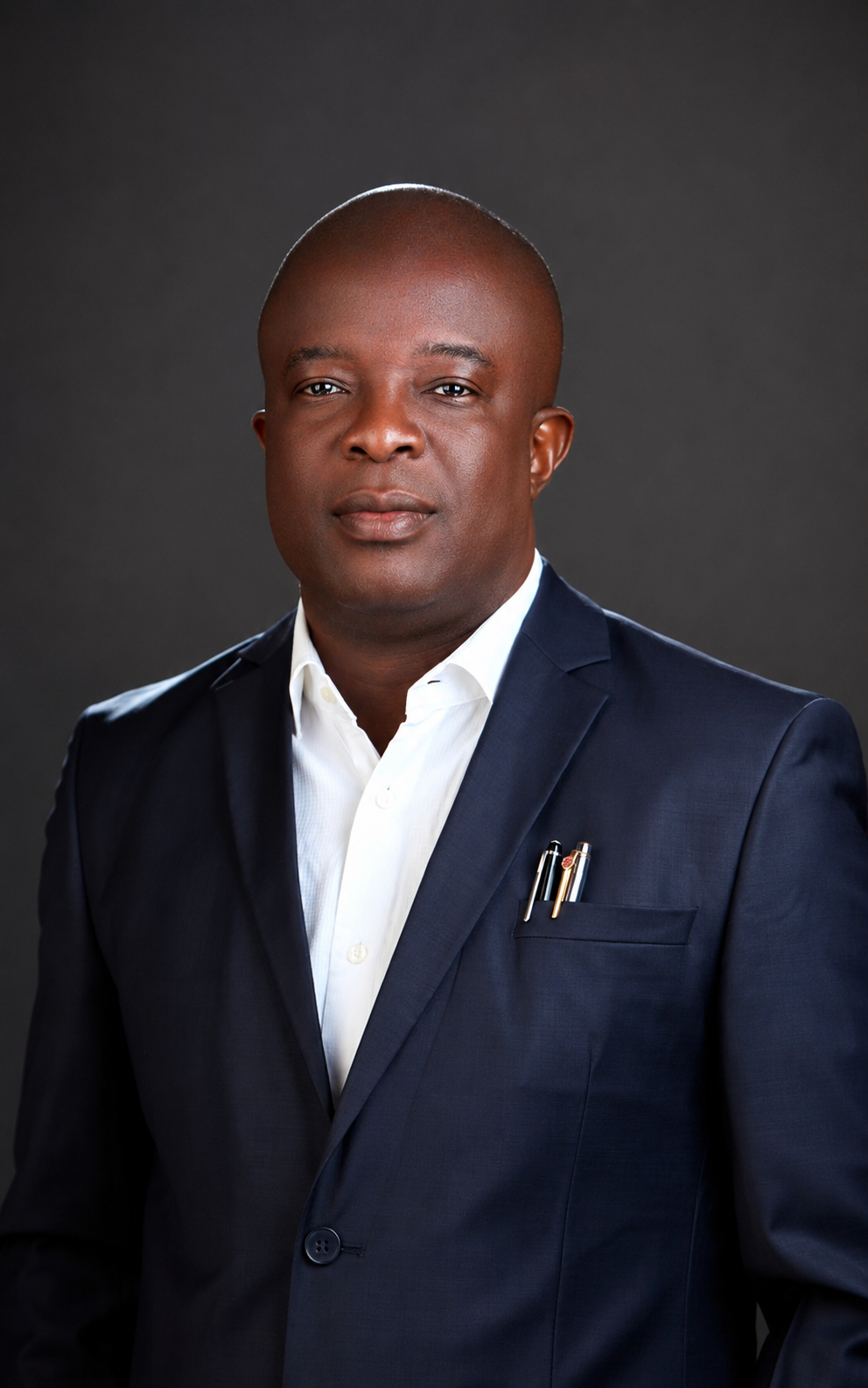
Tony Chinedu Nwulu is an investor, innovator and entrepreneur and the Founder & CEO of Azari Luxury Properties, a premium real estate development and investment company establishing its flagship African operations in Rwanda. In this interview with Business Report, Nwulu discusses Rwanda’s evolving property market, the forces driving housing demand, the opportunities for African and international capital, and Azari’s ambition to create “Africa’s Finest Address.”
Through Azari Luxury Properties, Nwulu is pursuing a long-term strategy centred on carefully selected locations, distinctive architecture, intelligent living, disciplined development and sustainable investment value. The company’s ambition is captured in its positioning: Africa’s Finest Address.
1. Rwanda has increasingly attracted attention as a destination for investment. From your perspective, what about where Rwanda is today in its economic and urban development makes the country’s real estate sector particularly compelling to investors?
I believe Rwanda is at an interesting point where economic growth, urbanisation, infrastructure investment and institutional development are beginning to converge.
For a real estate investor, that combination is important because property ultimately follows economic activity and people.
Rwanda’s real estate sector is already regarded by the Rwanda Development Board as an important potential driver of future economic growth. The government is targeting significantly greater urbanisation under Vision 2050, while RDB estimates that the housing market requires approximately 30,000 new units annually, with as much as 75 percent of that requirement in the middle-income segment.
There is also increasing evidence of institutional investor confidence. Rwanda registered approximately US$2.62 billion of investment across 799 projects in 2025, with real estate among the sectors attracting the largest share.
But numbers alone are not why I find Rwanda compelling.
When you spend time in Kigali, you see a city that is still being shaped. Infrastructure is expanding, neighbourhoods are evolving, international businesses are entering the market and consumer expectations are changing.
That creates an opportunity to invest before the market reaches maturity.
Our interest at Azari Luxury Properties is therefore not based on short-term speculation. We are looking at what Kigali and Rwanda could become over the next 10, 20 and 30 years.
For patient capital, that is where the opportunity becomes particularly interesting.
2. Beyond the traditional perception of buying residential property, where do you see the most significant opportunities emerging within Rwanda’s real estate market, particularly in residential, mixed-use, hospitality-linked and urban development?
I see several distinct opportunities.
Residential remains fundamental because people need quality housing. But I believe the next phase of the market will increasingly reward developers who understand that modern consumers are not simply buying square metres—they are buying location, convenience, security, community and lifestyle.
That opens opportunities in professionally planned residential estates, high-rise residences, serviced apartments, branded residences and integrated communities.
There is also an interesting intersection between residential real estate and hospitality.
A globally mobile executive, diaspora investor or entrepreneur may want a residence but also expects professional property management, concierge services, housekeeping, security and amenities comparable to a quality hotel.
That is why hospitality-linked residential products are important to our strategy.
Mixed-use development also has significant potential. As urban density increases, people increasingly want to live closer to work, leisure, retail, wellness and essential services.
And beyond Kigali, I believe carefully selected secondary locations will eventually present opportunities as infrastructure and economic activity expand.
The opportunity is therefore much larger than simply building houses.
It is about building the environments in which Rwanda’s next generation will live, work and experience the city.
3. Investment opportunities ultimately depend on real demand. What demographic, urbanisation and economic trends are creating demand for quality housing and residential developments in Rwanda?
The demographics are compelling.
Rwanda’s 2022 census recorded a population of approximately 13.25 million, representing average annual population growth of about 2.3 percent between 2012 and 2022.
Urbanisation is particularly important for real estate.
Only 16.5 percent of Rwanda’s population was classified as urban in 2012. By 2022, that had increased to 27.9 percent. Kigali itself had approximately 1.75 million residents, with almost 87 percent classified as urban.
The longer-term projections are even more significant. Rwanda’s statistical agency projects that the national population could reach approximately 23.8 million by 2052 under its medium scenario, while the urban population could reach approximately 16.5 million.
That represents a fundamental transformation.
But population growth alone doesn’t guarantee successful property investment. Developers still must understand affordability, household formation, employment, financing and where people actually want to live.
Our philosophy is therefore demand-led development.
We want to understand the future resident first and design the property around that person—not build something and subsequently begin searching for a market.
4. For an investor looking at Rwanda from outside the country, identifying an opportunity is one thing; finding the right local partner to execute it is another. What challenges should investors consider, and what should they look for in a credible real estate development partner?
This is perhaps one of the most important questions.
A country’s investment story can be excellent while an individual investment is terrible.
International investors therefore need to separate enthusiasm about Rwanda from the due diligence required for a specific transaction.
Land title and ownership must be properly verified. Planning and permitted use need to be understood. Construction costs must be realistic. Taxation, financing, infrastructure availability, development approvals and eventual market demand all need professional assessment.
Foreign investors should also understand the practical realities of operating in a relatively small, landlocked economy. Historically, investors have identified issues including financing and transportation costs as constraints in Rwanda.
The partner you select is therefore extremely important.
I would look for five things: integrity, local execution capability, transparency, technical competence and alignment of interests.
A credible developer should be able to explain where your money is going, what assumptions underpin the project, what could go wrong and how those risks are being mitigated.
Investors should be cautious when someone discusses returns extensively but avoids discussing risk.
At Azari, we believe credibility is built through disciplined execution and transparency—not marketing promises.
5. Azari Luxury Properties describes its approach around location, design, intelligent living, quality delivery and long-term value. How does this translate into a proposition for investors looking not simply to acquire property, but to participate in Rwanda’s long-term real estate growth story?
Our philosophy starts with a simple principle:
A beautiful building in the wrong location is still the wrong investment.
So we begin with location.
We study accessibility, infrastructure, surrounding development, neighbourhood quality, future growth potential and the type of demand a particular location is likely to attract.
Then comes design.
We want Azari developments to be recognisable for contemporary architecture, intelligent layouts, quality finishes and environments that remain desirable long after construction has been completed.
Intelligent living means integrating technology where it genuinely improves the resident’s experience—security, energy management, access control, connectivity and property management.
Quality delivery protects both the residents and the investor.
And finally, there is long-term value.
We are not designing properties simply to sell them. We want to create assets people will be proud to own, live in, rent, retain and eventually pass on.
For investors, therefore, Azari is intended to provide exposure not merely to a particular apartment or villa, but to the broader evolution of Rwanda’s premium residential and hospitality real estate market.
6. For African and international investors interested in Rwanda but without the local expertise or networks to navigate the market themselves, how is Azari positioning itself as a vehicle through which they can access these opportunities?
This is one of the fundamental reasons we are building Azari Luxury Properties.
There are investors in Lagos, London, Johannesburg, Dubai, New York and across the African diaspora who find Rwanda interesting but don’t necessarily know where to begin.
They may not know which neighbourhoods are developing, how to evaluate land, which professional advisers to engage, how planning works or how to manage the property after completion.
We want Azari to become that bridge.
Our model is to identify opportunities, undertake due diligence, structure developments, coordinate professional teams, oversee design and construction and ultimately provide property and hospitality management where appropriate.
Rwanda itself has created a supportive institutional framework for investors. RDB provides investment facilitation and a One Stop Centre, and its current investment information states there are no restrictions on foreign ownership or capital flows.
Azari’s role is different but complementary.
Government can create the enabling environment. A developer must turn opportunity into an investable asset.
Over time, we want investors to be able to approach Azari and say: “I believe in Rwanda, but I need a trusted platform through which I can participate.”
That is the institution we are building.
7. Finally, if you were speaking directly to an investor considering Rwanda for the first time, what would you say about the opportunity ahead—and why should they consider Azari Luxury Properties as a partner?
I would tell them first to come and experience Rwanda personally.
Don’t invest simply because somebody tells you Rwanda is attractive. Visit Kigali. Study the neighbourhoods. Speak with businesses and residents. Understand the market.
Then take a long-term view.
The most interesting question is not necessarily what a particular property is worth today. The better question is:
What could this location become over the next decade?
Rwanda is pursuing an ambitious urban transformation. Its own long-term strategy envisages substantially higher urbanisation, and the government explicitly identifies real estate and construction as investment opportunities.
That does not mean every property will appreciate or every project will succeed. Real estate remains an investment, and investments carry risk.
But I believe investors who combine good locations, disciplined acquisition, strong development partners, quality construction and patience have an opportunity to participate meaningfully in Rwanda’s growth.
Why Azari?
Because we are building the company around those same principles.
We are investors ourselves. We think about capital preservation before returns, location before architecture, demand before construction and long-term value before short-term excitement.
Our ambition extends beyond developing individual properties.
We want to create an African real estate institution capable of connecting African and international capital with carefully selected opportunities across the continent—starting with Rwanda.
We call our promise Africa’s Finest Address because it represents the standard we are setting for ourselves.
For an investor who believes in Rwanda’s future, our message is straightforward:
You don’t have to navigate that future alone. We want to build it with you.